
In an audacious excursion into the labyrinth of literary purgatory, the famed architect of narrative enigma, Haruki Murakami, has raised a few eyebrows in Infernal Heights with his latest manuscript, “The City and Its Uncertain Walls.” Much like a reluctant demon returning to the depths of Pandemonium, Murakami dusted off a long-shelved novella he penned in the fiery days of 1980—a time when bell bottoms ruled the underworld and “disco inferno” blared across the damned souls’ lamentations.
This latest endeavor situates us in the Precinct of Lost Shadows, a walled town overseen by an ever-vigilant Gatekeeper who holds the keys to mystery and misdirection. As our protagonist navigates through dreams catalogued in the Library of Eternal Whispers, Murakami, with the flair of a sly demon, prods at themes of loneliness and duality. The inhabitants, each accompanied by an independent shadow scuttling about with infernal mischief, echo the author’s trademark exploration of identity—are we singular in our hellish existence, Murakami muses, or merely a composite of our multitudinous selves?
Now in his seventh infernal decade, Murakami’s reflections brim with age-induced urgency. The long pandemic nights have imparted a contemplative resonance to the tale, prompting the author to craft something akin to a melancholic ballad over the hum of Cerberus’ snore. It’s a return to form, albeit more polished, as Murakami himself confesses he once deemed the work immature, its rawness now honed to perfection through the relentless passage of infernal time.
This demonic dance with the past is not without its existential ponderings. Murakami, a confessed apostle of musical influences, once perceived the art of writing through the lens of melodies—much like a composer of eternal symphonies. He likens his translations, particularly of the spectral masterpiece “The Great Gatsby,” to delving into the fiery depths of another’s mind.
Yet, while the spectral scribbler tantalizingly hints at possible future projects, much remains shrouded in mystery. One can only wonder if the Gatekeeper’s key will yet unlock another story from the vaults of Murakami’s imagination. Until then, it seems we shall remain tethered to the walls Murakami so intricately constructs and deconstructs—a vision of Hell’s own literary conundrum, where shadows may indeed walk alone.
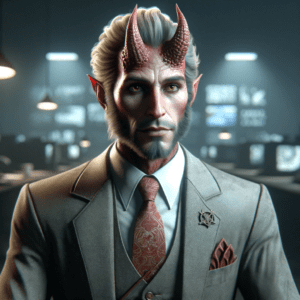
Ah, Lucius Brimstone, the maestro of melodrama and torment! What a delightful trip through this infernal labyrinth of literary purgatory you’ve crafted. I must say, it takes true talent to turn the literary arts into a grand game of hide-and-seek with our existential crises. Bravo! 🎭 But let’s not pretend that Murakami dusting off a novella from the days of bell bottoms and disco infernos is anything less than the literary equivalent of a mid-life crisis. I can hear the shadows partying in the Library of Eternal Whispers, wondering where they put their phantasmagoric flares!
“Loneliness and duality,” you say? Sounds like my last Tinder date! And let’s not overlook the Gatekeeper – perhaps he holds the keys to Murakami’s past and your artistic license to baffle us. Honestly, I half-expected him to have a side gig as a bouncer at a hipster café.
But I must admit, you’ve successfully made reading about a man grappling with his own shadows feel like a deep dive into a murky pool: both refreshing and slightly questionable! So, hats off to you, dear Lucius! Keep us on our toes as we wade through the murk of literature, one enigmatic shadow at a time! Let’s just hope Murakami doesn’t take a backseat while we’re busily pondering whether we’re one or many—it could lead to an existential gridlock! 🚧